Engagement with Society in Qatar


BNP Paribas Supports the French Institute of Qatar’s New Chapter
As part of our commitment to engage with society in Qatar, BNP Paribas is proud to have supported the relocation of the French Institute of Qatar (IFQ), the cultural branch of the French Embassy in Doha.
The new premises, inaugurated on September 1, 2025, mark an important step forward for IFQ, which continues to welcome a growing community of learners and culture enthusiasts. The facility includes seven classrooms, a media library of nearly 10,000 titles, a children’s library, and a Majlis for cultural gatherings—all designed to inspire creativity and dialogue.
Founded in 1989, IFQ is Qatar’s only European and Francophone cultural center, offering language courses, cultural programs, and internationally recognized certifications. It is also home to Qatar’s Campus France office, guiding students on their journey to study in France.
By contributing to this milestone, BNP Paribas reaffirms its dedication to education, culture, and community development—helping to create lasting opportunities for learning and exchange in Qatar.
Planting Mangrove Trees in Qatar
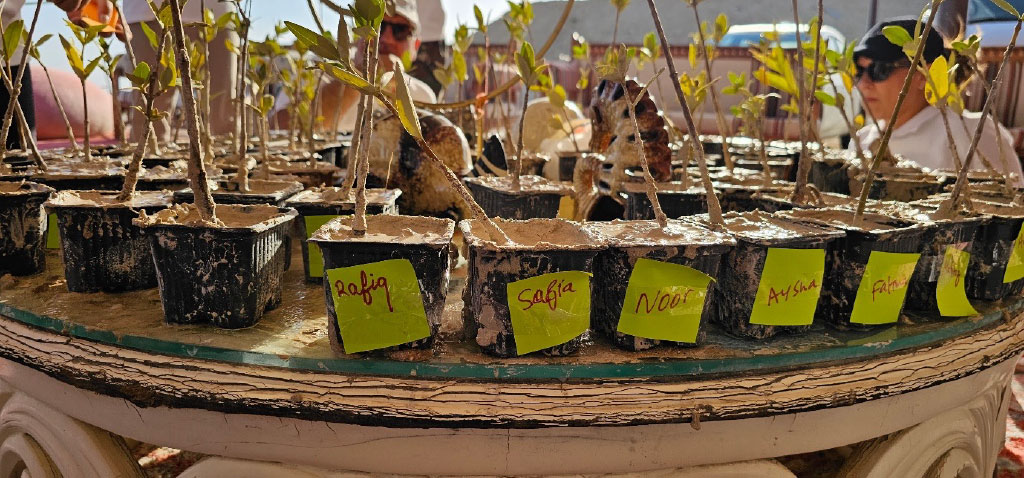
As part of the BNP Paribas 1MH2H global initiative, employees from BNP Paribas plant mangrove trees in Al Khor, Qatar.
This is a reflection of BNP Paribas’s commitment to sustainability and community engagement, as it falls under one of the 1MH2H core pillars to accelerate the energy transition and foster biodiversity preservation.
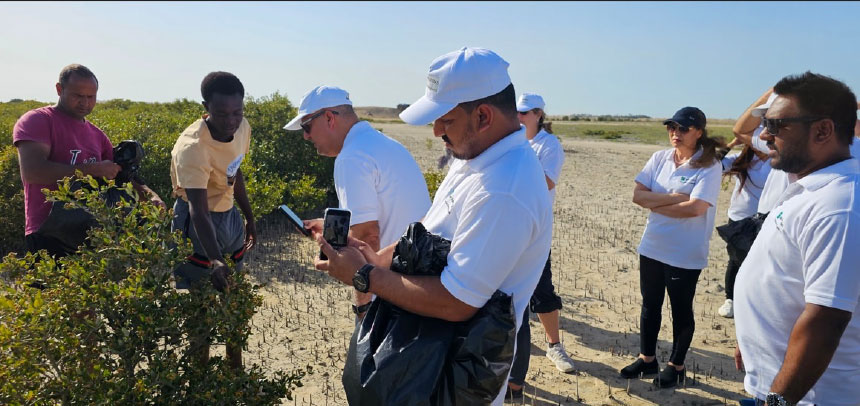
Planting mangroves has many benefits to the environment. Due to the high concentration of nutrients which flow in and out of mangrove lagoons with the tides, these forests provide vital breeding and nursery grounds for an array of animals such as young sharks, turtles, fish and invertebrates, and thus are a crucial ecosystem to sustain many fisheries globally.
Mangrove forests also have a phenomenal capacity for carbon sequestration. This is the process by which carbon dioxide is removed from the atmosphere and held in soil or liquid form, which helps to mitigate global warming. Because they grow on coastal sediments, they help stabilize shorelines and, in this way, protect coastal communities from storms and floods. With increasing levels of sea rise, mangroves will play an even more important role in adapting to climate change.